CONSTRAINT-FIRST BUYING GUIDE
Best Miter Saw Blade
There is no best tooth count without the material, blade diameter, and required edge.
BOTTOM LINEMatch diameter and arbor first, then choose tooth count and grind for material and finish.
- Start with the cut and workspace constraint—not a popularity ranking.
- Reject any model that fails one hard requirement, even if it scores well elsewhere.
- Verify the current manufacturer manual before buying or cutting.
TRADE-BASED: CHOOSE THIS CLASS IF
Match diameter and arbor first, then choose tooth count and grind for material and finish.
EXPLICIT EXCLUSION
Never install a blade based on diameter alone; kerf, RPM, plate clearance, and arbor remain gates.
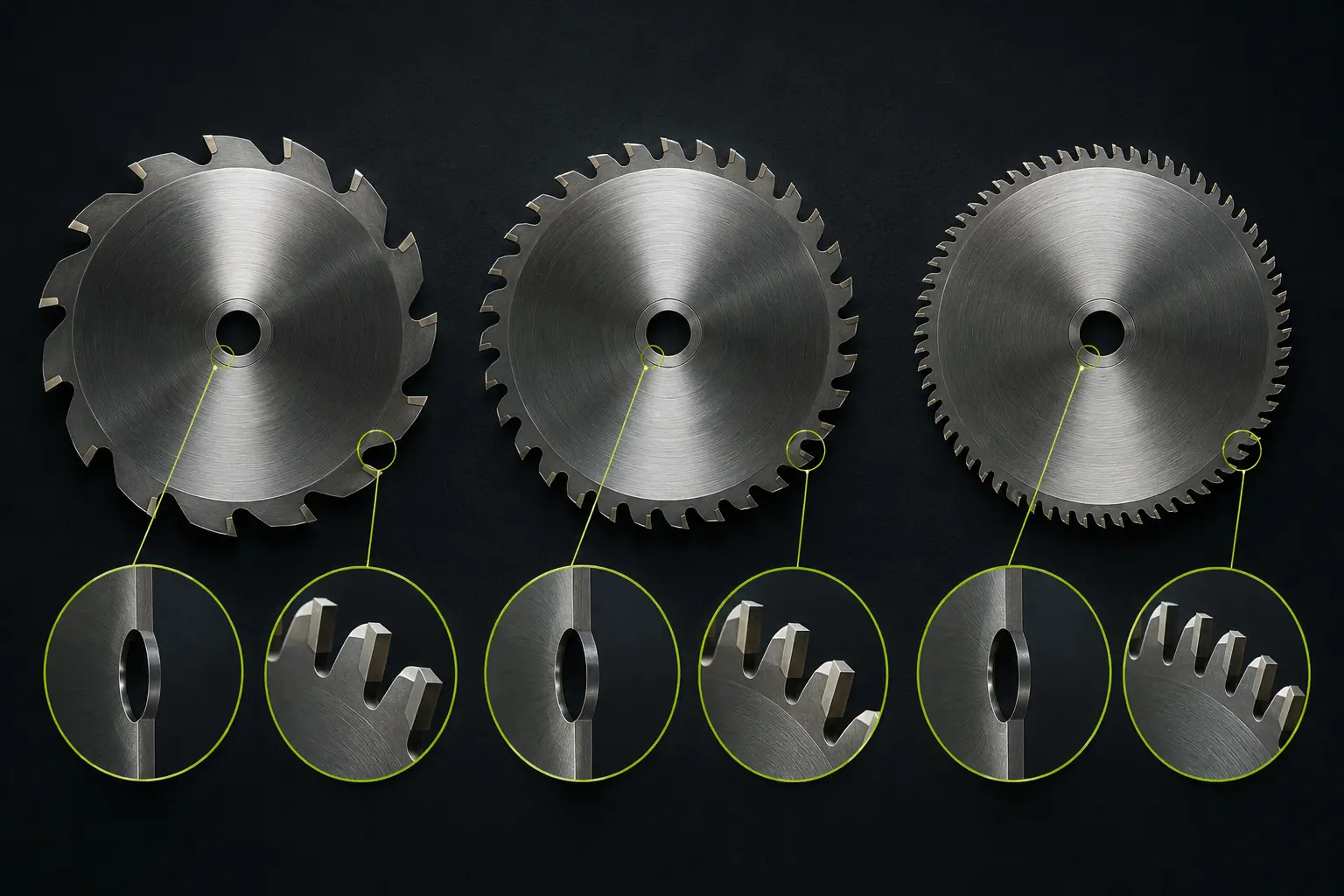
Compatibility is a chain—not one number.
Diameter and arbor are hard gates. Tooth geometry and count tune the edge. RPM, kerf, plate clearance, and brake compatibility remain verification gates.
Conceptual instructional graphic · verify the exact saw manualTHE DECISION FUNCTION
Start with the constraints
- 01Diameter
- 02Arbor
- 03Tooth count
- 04Grind
- 05Maximum RPM
Three model records to investigate first
| Model | Blade | 90° crosscut | Nested crown | Weight | Evidence |
|---|---|---|---|---|---|
| DEWALT DWS780 | 12″ | 14″ | 7.5″ | 56 lb | Manufacturer source ↗ |
| Bosch GCM12SD | 12″ | 13.5″ | 6.5″ | 65 lb | Manufacturer source ↗ |
| Makita LS1019L | 10″ | 12″ | 6.625″ | 57.9 lb | Manufacturer source ↗ |
Specifications narrow the field; they do not prove hands-on performance. “Best” remains conditional on the constraints above.